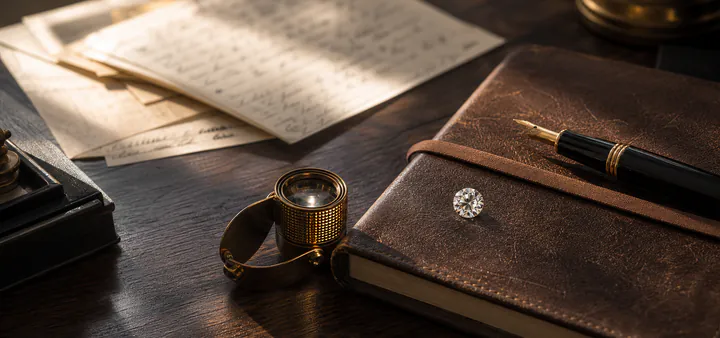
Short answer: take the ring to a bench jeweller, a manufacturer or a dealer, and have the diamond valued as a diamond before anyone weighs the gold.
- They price the stone. A cash-for-gold counter has no way to sell a diamond, so it pays for grams. A dealer can place it, which is the only reason an offer gets built on colour, clarity and cut instead of on metal.
- Cheaper if any of this ends in a purchase. A retail counter buys its diamonds at that same trade level and then roughly doubles the price, about three times at a branded showroom, so a new centre stone or an upgrade costs less bought one step earlier.
- Better. The specification most buyers want is about five times more common at that level: 52 percent of trade-access stock against 9 percent of retail-held stock. That is how a good inherited stone gets traded across a counter for a bigger, weaker one.
- They do the rest too. Unsetting the stone, remaking, resetting, resizing, re-tipping, insurance valuations, repairs and buy-back, on their own bench. A retail counter mostly sends that work out to a bench like theirs.
Use a retail jeweller with a bench instead if the piece is being remade for a date a few weeks away, you want to see a dozen finished designs on a hand before deciding, or you want a shopfront you can walk back into in ten years. Just insist the diamond is valued on its own line.
Repurpose a diamond ring in Johannesburg: value the stone before you touch the gold
When you decide to repurpose a diamond ring in Johannesburg, the first question is really one question wearing two hats: what is the stone worth, and what is the gold worth? Treat the answers as one number and you will lose money. A diamond ring is a valuable stone sitting in a cheap-by-comparison band, and the two should be valued, and decided on, separately. When you walk into a cash-for-gold counter with grandmother’s ring, you are usually offered the scrap-metal weight and nothing for the diamond, because that counter has no way to sell the stone. The diamond is the part worth keeping.
So before any decision to reset, remake, or sell, get the diamond examined loose, or as close to loose as is safe. Everything else follows from what that one stone actually is.
Where the Johannesburg trade actually sits
Two clusters do this work in greater Johannesburg. The historic one is Jewel City, the diamond and jewellery district off Main Street in the CBD, where cutters, setters, and dealers have worked for decades behind security doors rather than shopfronts. The second is a scatter of bench jewellers and goldsmiths through the northern suburbs like Sandton and Rosebank and the eastern suburbs around Johannesburg and Edenvale, who handle private remakes for walk-in clients.
The distinction that matters is not geography, it is capability. A retail jeweller in a mall sells finished pieces and outsources the bench work. A bench jeweller or goldsmith does the physical resetting. A cutting house works the actual diamond. For repurposing, you want someone who can value the stone honestly and either reset it themselves or send it to a setter they trust, not a counter that only weighs metal.
Reset, remake, or sell: how to choose
The stone drives the decision, every time.
| Route | Best when | What it costs you |
|---|---|---|
| Reset | The diamond is a good natural stone and only the setting is dated or damaged | A new setting in 18ct or platinum, a known quotable figure, plus bench labour |
| Remake | You have sentimental gold or several stones from different pieces to combine | Design time, bench labour, and any new metal beyond what is reused |
| Sell the stone | The diamond is small, heavily included, damaged, or not emotionally important | Nothing to make, but you accept a trade-buyer price, not retail |
| Upgrade | The old stone has modest value and you would rather put it toward a better natural diamond | The difference between the old stone’s trade value and the new one |
A reset keeps your diamond and gives it a current setting. A remake is a bigger project, often the right call when you are merging two grandmothers’ rings into one piece for a grandchild. Selling makes sense when the stone simply is not worth carrying forward. And an upgrade is the quiet option people forget: trade the old stone in and walk out with a better natural diamond, using the old value as a deposit. If that is your direction, the upgrade engagement ring Johannesburg page works through the trade-in maths properly.
How resetting actually works on the bench
People worry the diamond gets lost when an old ring is melted. It does not. The jeweller removes every stone first, under a loupe, and sets them aside in a parcel paper. Only then is the empty mount weighed and, if you are not reusing it, melted for scrap or credited. The diamond is re-examined out of the setting, which is the first time anyone can grade it honestly, because claws and a dirty old mount hide a surprising amount.
If the old gold has sentimental weight, say it explicitly. A goldsmith can often carry the actual metal into the new piece rather than swapping it for fresh gold, though purity matters: 9ct, 18ct, and platinum cannot simply be mixed, and the design has to suit the metal you have. Where the gold cannot be reused directly, its scrap value is credited against the new work, so you are not paying twice.
Value the diamond before you commit
This is where most repurposing decisions are made or lost. Spec drives a natural diamond’s value far more than carat weight alone, and you can see the size of that effect on the published benchmark without taking anyone’s word for it. Rapaport’s round list of 20 March 2026 prices G colour, VS1 clarity in the 1.00 to 1.49 carat bracket at $5,400 per carat. Apply the 10 to 30 percent discount the trade sells at, convert at R16.50 to the dollar, add 15 percent VAT, and a loose one carat in that grade costs roughly R72,000 to R92,000 to buy today. Now hold a lower colour and a lower clarity against the same weight on the same list and the figure falls away sharply. That is why a carat weight on its own tells you nothing about your ring. Until your stone is out of its mount and properly graded, nobody can honestly say whether it is worth resetting, and anyone who does is guessing at your expense.
There is a second number to put in its place before you accept any quote, and it is the one the family remembers paying. Retail convention is keystone: the counter price is roughly double what the stone cost the counter, and a branded showroom runs to about three times, while the margins between one trade level and the next are thin at commonly 3 to 5 percent a hop. So the old invoice in the ring box is not the stone’s value. It is the stone’s value plus a retail step that no buyer can recover. Work from the grade, never from the receipt, and the offers you get will stop feeling like insults.
If the answer turns out to be sell and upgrade, one more finding is worth carrying into the shop. In June 2026 we listed 230 GIA-certified natural diamonds across six South African sellers and split them by where the stone was physically held. Where trade access could reach, 52 percent of the stones were D to G colour with VS2 clarity or better. In stock held on a South African retail shelf, 9 percent cleared the same bar. That is a comparison of what is stocked and not of price, but it explains the most common way an upgrade goes wrong: a good inherited diamond traded across a counter for a bigger carat weight in a lower colour and a lower clarity, which feels like progress and is not. The full method is in our diamond price index for South Africa, which is the reference I would read before walking into any valuation.
Finding the right person to give you a number is its own problem, and the obvious search words are the wrong ones. Almost nobody in South Africa searches for a diamond dealer or a diamond wholesaler, and the few results those terms return are not the benches that do this work. Go at it through the price instead, with 1 carat diamond price or diamond price per carat South Africa. A seller who publishes a rand figure per carat has already agreed to be measured in public, which is exactly the disposition you want in someone valuing a stone they did not sell you.
The diamond buying checklist is written for buying, but it inverts cleanly for a valuation, because these are the same questions pointed the other way. Will the stone come out of the mount before anyone puts a number on it, and will you be standing there when it does. Is the figure you are given a trade-buying offer, a retail-replacement figure for insurance, or a guess at what it might fetch privately, because those three can differ by a multiple and are routinely quoted as though they were one thing. Is the metal weighed and priced apart from the diamond, or folded into a single number. Does the quote for the new setting stand on its own line, in writing, before you agree to anything at all. Take the same stone to two benches in the same week and by the second answer you will usually know which of them is being straight with you, without either of their names having come into it.
Who I would take an inherited stone to first
An inherited stone usually arrives with no report, in a setting nobody would choose today, and with more meaning attached than money. That combination needs a bench, not a counter.
Take it to a cutting house or manufacturing jeweller before you take it anywhere else. They can tell you what the stone actually is rather than what the family believes it is, advise honestly on whether a recut would improve it or simply lose weight, and design a setting around the stone you have instead of the stone they would like to sell you. A retail counter is set up to sell you something new, and an old stone in an old mount is a trade-in to them rather than a starting point.
Ask for it graded before any design conversation begins. Everything else, what suits it, what it is worth, whether to reset or leave it, follows from knowing what is in your hand.
What to bring, and what to ask
Bring the ring, any GIA or older appraisal report, the original invoice if it survives, and clear photographs. Then ask, and get the answers in writing:
- Is the diamond natural or lab-grown?
- What is its likely colour, clarity, and cut once it is out of the setting?
- Is it worth a GIA report for its carat?
- Can the stone be removed safely without risk?
- Can the old gold be reused or credited?
- What would a new setting cost in 18ct versus platinum?
- If I upgraded, what would the old stone be worth as a trade-in?
One last note on lab-grown, because it changes the maths entirely. A lab-grown one carat is worth a small fraction of a natural one, and the resale side is thin rather than absent. Published estimates put it at somewhere between 10 and 40 percent, on estimates that disagree sharply with each other, of what was originally paid, some large retail groups will not take these stones on trade-in at all, and the underlying price has fallen somewhere between 70 and 96 percent depending on the base year and the size measured. So if a valuer suspects the stone in front of them is lab-grown, spending real money setting it into an expensive new mount seldom adds up, and any trade-in offer against it may be small or simply not on the table. That is exactly why you confirm what the stone is before you spend a cent on the gold around it.